
COURSE NAVIGATION
Lecture 5: Civilizing the Furies
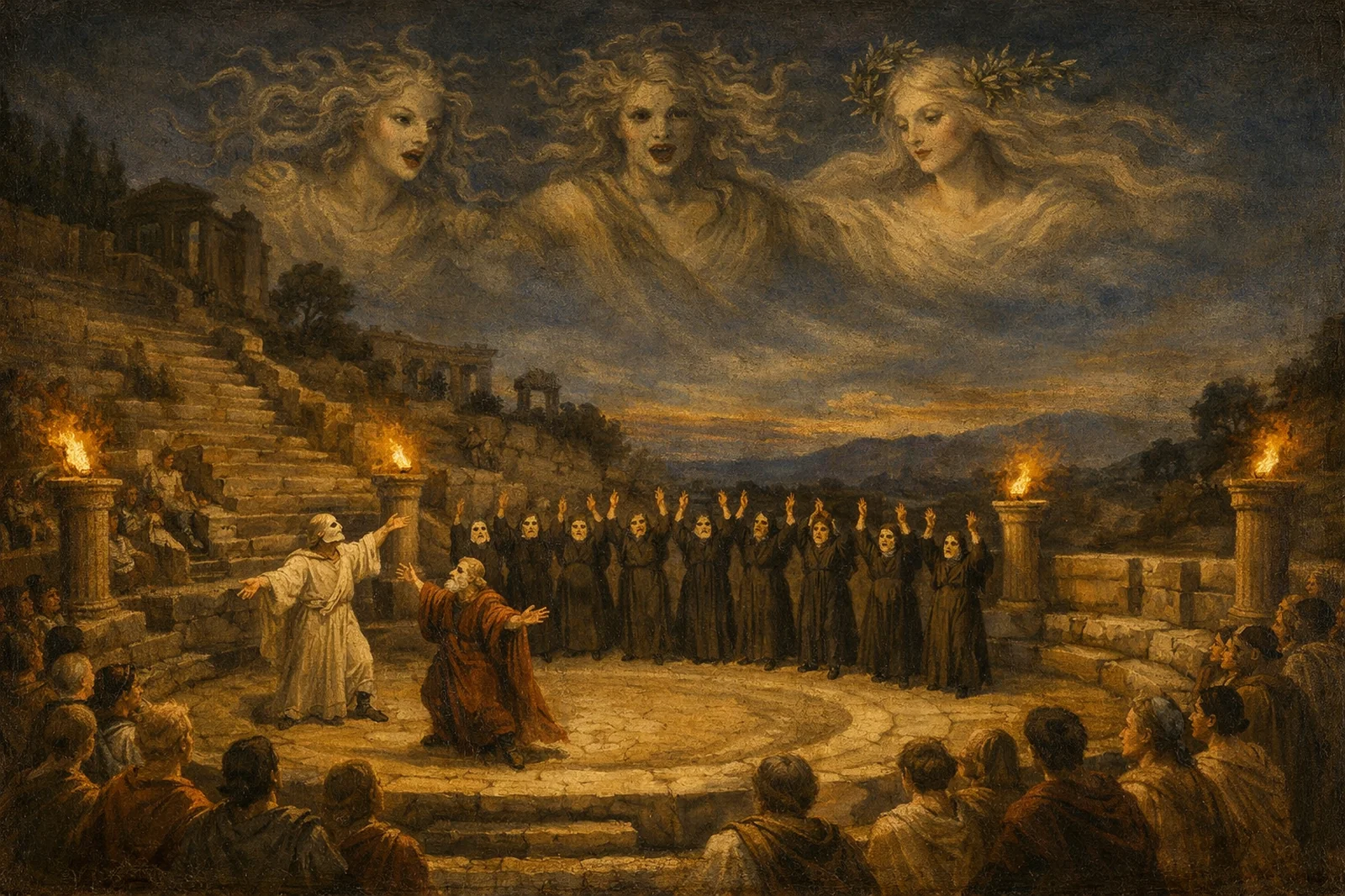
In the 5th of 17 lectures in his "Civilizing the Barbarians" course, Stepanov provides a lecture on the history of Greek theater, specifically focusing on the trilogy of plays by Aeschylus called "The Oresteia." Stepanov explains that Greek civilization began with epic poetry, but that theater was soon developed as a new art form that was used to elaborate on themes from Homer. Stepanov goes on to describe the origins of Greek theater, which began as a group of people singing and dancing, but eventually evolved to include dialogue and actors, with the introduction of masks for different characters.
Stepanov then introduces the three great Greek tragedy playwrights of Aeschylus, Sophocles, and Euripides and relates them to one another in time using the anchor of The Battle of Salamis in 480 BC. Here is a quick summary of these three Greek tragedians:
| Greek Writer | Born | Age at The Battle of Salamis (480 BC) | Notable Contributions |
|---|---|---|---|
| Aeschylus | c. 524 BC | ~ 44 years old | Considered the father of tragedy, Aeschylus wrote somewhere between 70-90 plays throughout his career, only 7 of which are known to have survived. One of his most famous surviving works is the "Oresteia" trilogy. He is credited with introducing elements such as having two actors in a play, the use of the chorus, and the development of plot and character. |
| Sophocles | c. 496 BC | ~ 16 years old | Sophocles wrote over 120 plays throughout his career, but only 7 of them have survived. His most famous works are "Oedipus Rex," "Antigone," and "Ajax." Of the three great Greek tragedians, Sophocles won the most drama competitions, winning twenty-four of the thirty that he entered. |
| Euripides | c. 484 BC | ~ 4 years old | Euripides wrote over 90 plays throughout his career, but only 18 have survived. His most famous works are "Medea," Bacchae," "Hippolytus," and "The Trojan Women." Unlike Aeschylus and Sophocles, Euripides' plays were known for challenging the traditional religious and social order of the time. He also was known for his naturalistic and more realistic portrayals of characters. |
Stepanov covers Aeschylus' "Oresteia," in detail. This trilogy of Greek tragedies consists of the three plays: "Agamemnon", "The Libation Bearers", and "The Eumenides". It is a continuous story about the House of Atreus, which gets its name from Agamemnon's father Atreus and was said to be cursed by the blood guilt of past generations and the aftermath of the Trojan War. These plays were likely performed in sequence, with the action of each picking up where the previous one left off.