
COURSE NAVIGATION
Lecture 3: Iliad/Hubris
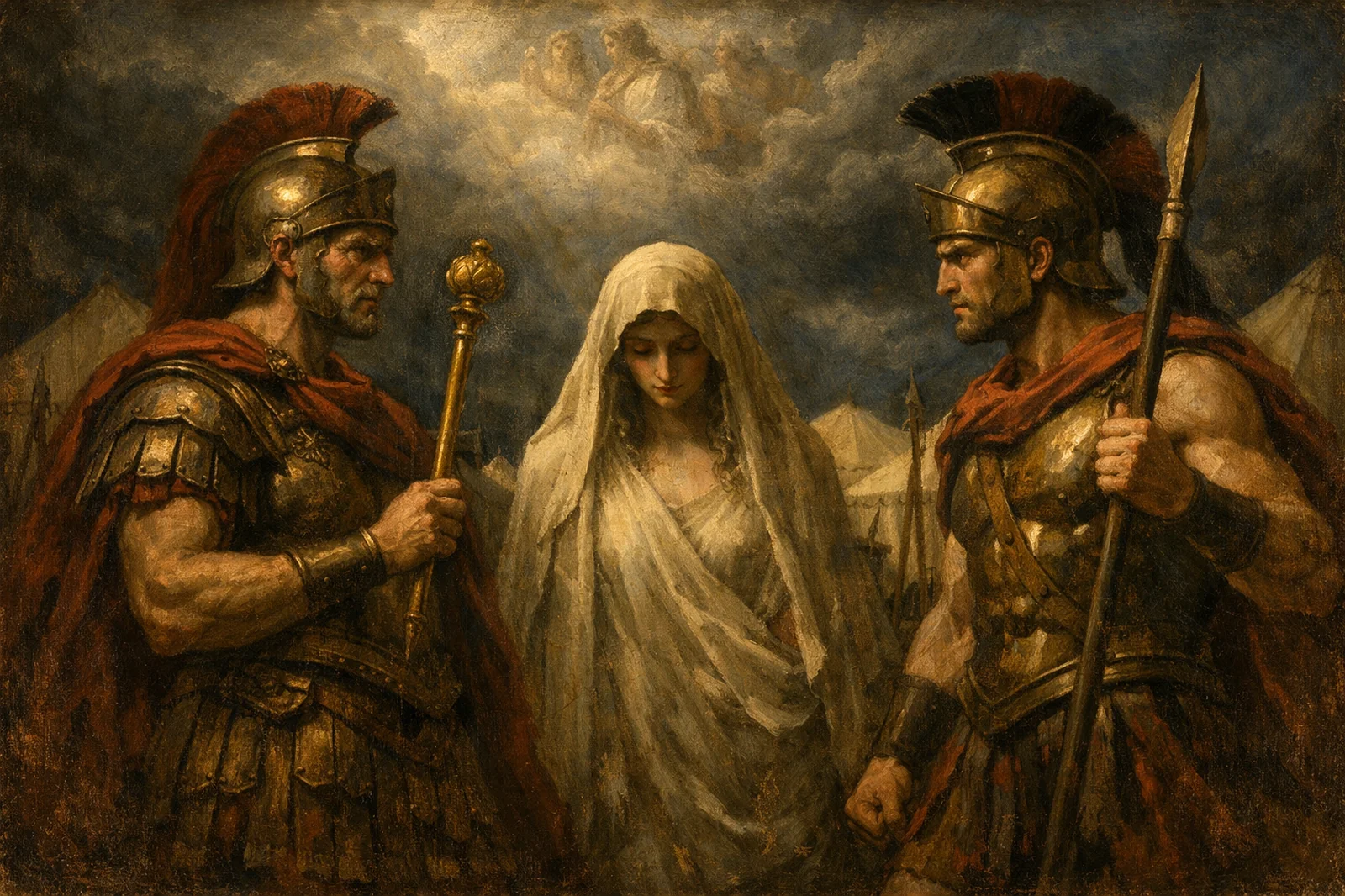
In the 3rd of 17 lectures in his "Civilizing the Barbarians" course, Stepanov asserts that "The Iliad" is important because it reaches to the very depths of ourselves and explains what we are. He repeats the thesis from his last lecture that the central theme of "The Iliad" is the conflict between the greatest warrior, Achilles, and his commander, Agamemnon. Additionally, Stepanov introduces the related themes of pride and hubris.
Stepanov relates the beginning of the conflict in "The Iliad" where Agamemnon refuses to return a girl to her father, who was a priest of Apollo, leading to an epidemic and a compromise that damages Achilles' pride. Stepanov shares Achilles' eventual decision to not fight in the Trojan War. In "The Iliad," the Trojans take advantage of this absence and this puts the Greeks in a dire situation.
During the rising action of "The Iliad," a dear friend of Achilles named Patroclus fights in Achilles' place and is killed by a Trojan prince named Hector, leading to Achilles' decision to return to the war and seek revenge. Stepanov describes the brutal and unfair fighting in "The Iliad," and how the gods often intervene on behalf of one side or the other. Most importantly, Stepanov urges his audience to read "The Iliad" and consider its themes and lessons, especially with respect to fighting pride and hubris.