
COURSE NAVIGATION
Lecture 17: Athens and Jerusalem
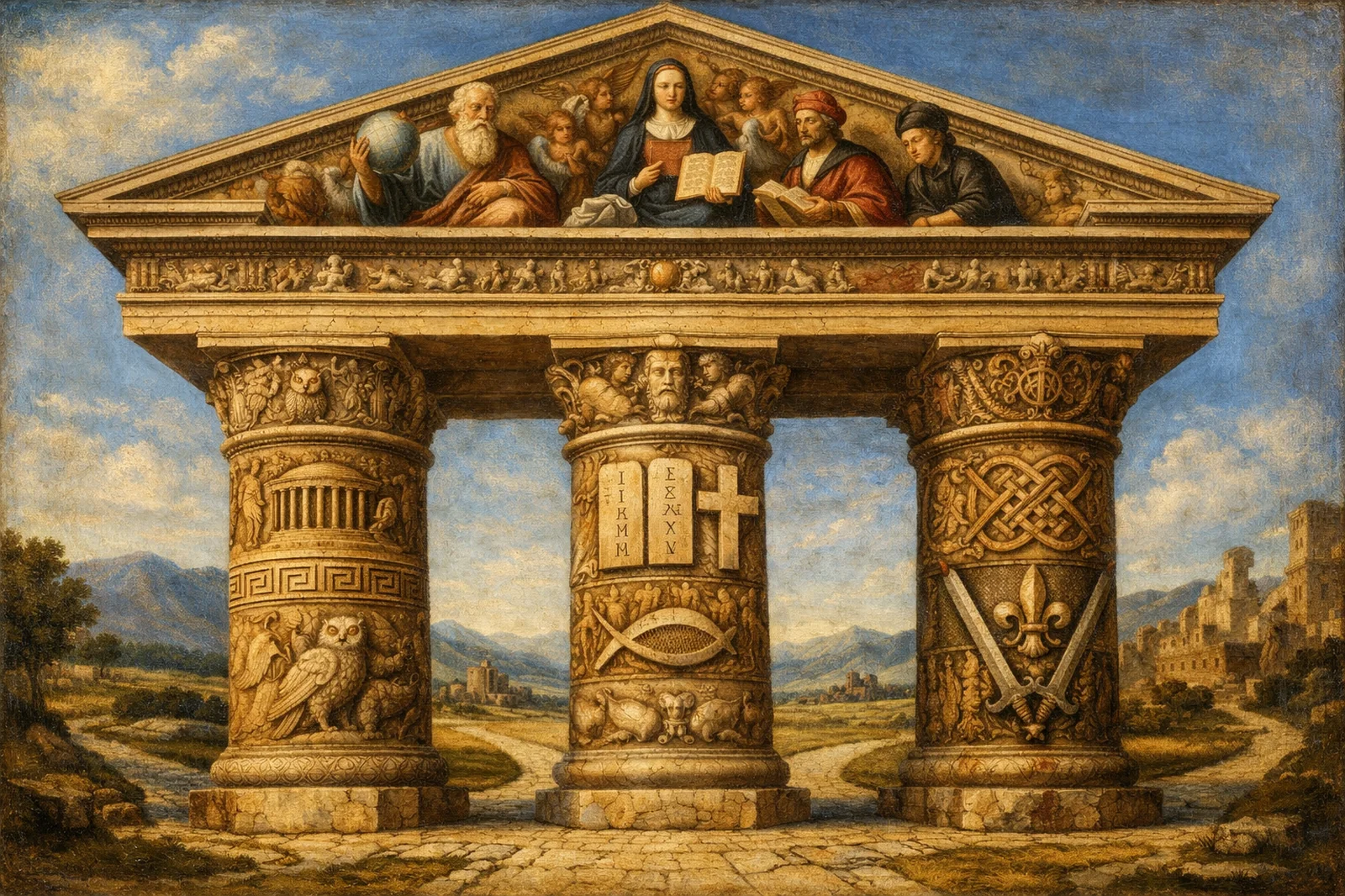
In the 17th of 17 lectures in his "Civilizing the Barbarians" course, Stepanov begins the lecture by posing the question of what the connection is between Athens and Jerusalem in the development of Western civilization. His contention is that Western civilization has three legs. It's like a tripod upon which a camera is resting. One leg is Greek and heavily influenced by Athens; another leg is Christian and heavily influenced by Jerusalem; the third leg is made of barbarian Frankish influences. According to Stepanov, these three things fused to produce Western civilization.
Stepanov mentions that the Latin-speaking Western world may disagree with the idea that Greek learning and philosophy were essential to the development of Western civilization. One challenge to Greek influence was a gap that occurred after the fall of the Western Roman Empire. The fall led to a lack of access to Greek knowledge and ideas in Western Europe. It wasn't until the Renaissance period beginning in the 14th century that this gap was filled. However, it is now a well-known fact among historians that the rediscovery of ancient Greek texts and ideas during the Renaissance had a profound impact on the development of art, literature, science and philosophy in Western Europe.
An additional topic that Stepanov delves into is the difference in the development of Western civilization between Western Europe and Eastern Europe. He explains that while the Byzantine Empire preserved Western culture in Eastern Europe and developed a great theological and philosophical tradition, Western Europe entered a period of decline, known as the Dark Ages, due to the decline of the Roman Empire and the influx of barbarians. Stepanov also highlights how the Byzantine Empire's defensive civilization, as opposed to Western Europe's desire to develop and progress, contributed to the differences in their development.
A third important aspect of the lecture is the significance of Jerusalem in the development of Western civilization. Stepanov emphasizes that Jerusalem is the birthplace of Christianity and the site of key religious events and traditions that have shaped the Western world. He states that it played a crucial role in the fusion of Greek culture, Christian theology, and barbarian Frankish influences. He also argues that the combination of these three elements was necessary for the development of Western civilization, and Jerusalem played a central role in that process. It brought an emphasis on religious and spiritual values while Greek culture contributed a strong tradition of philosophical and intellectual inquiry.
Stepanov does not mention the Roman Empire as having a significant role in the development of Western civilization. This may be because, according to him, the Roman Empire was primarily a political and military power, and the real cultural foundations of the West came from Athens and Jerusalem. However, it's worth noting that the Roman Empire, with its political and legal systems, did have a significant influence on the development of Western civilization. The Roman Empire also spread Christianity, which Stepanov includes as a key element of his thesis.
In conclusion, Stepanov's lecture explores the connection between Athens and Jerusalem in the development of Western civilization. He argues that the fusion of Greek culture, Christian theology, and barbarian Frankish influences led to the formation of Western civilization. He concludes by stating that Western civilization is remarkable for its ability to develop and look at things afresh, unlike the Byzantine Empire which was unable to do so.